
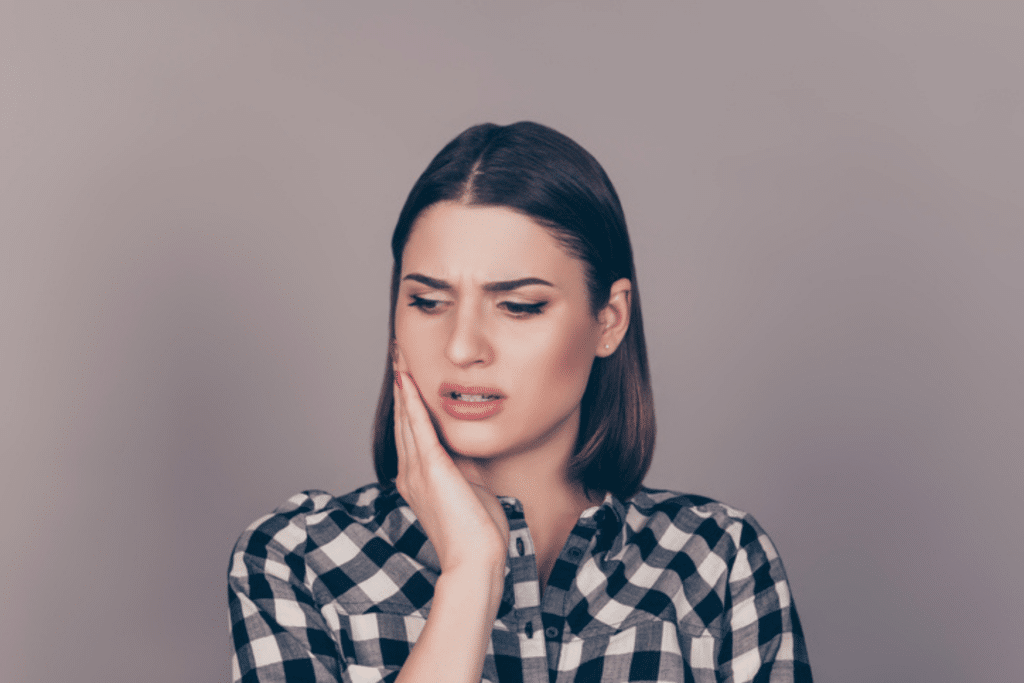
At Davoody & Hablinski Orthodontics, Dr. Amir Davoody looks at the teeth, bite, and jaw together. Patients in Houston, TX and surrounding communities can receive a personal exam to learn whether uneven tooth contact may be adding to their symptoms.
How Can the Way Your Teeth Meet Affect Jaw Comfort?
Your bite is the way your upper and lower teeth meet when you close your mouth. When contact is uneven, the lower jaw may slide before the teeth settle into place.
This repeated shift can strain the chewing muscles and make normal jaw motion less smooth. Pain may be more noticeable while eating, speaking for a long time, or bringing the teeth together.
Overbites, underbites, crossbites, open bites, and early contact on one side can affect how the jaw closes. A steady sideways slide may also show that the teeth are not meeting evenly.
However, a bite problem does not always cause pain. Some people have crowding or an uneven bite without symptoms. Others have soreness even when their teeth seem to fit well. The link between the bite and the pain must be clear before braces or aligners are advised.
When Are Braces Considered for Jaw Pain?
Braces are considered when a problem with tooth position affects comfortable chewing or balanced jaw closure.
Treatment may be useful when one side of the teeth touches first, the lower jaw shifts while closing, or chewing feels easier on one side. It may also be discussed when teeth have moved and jaw symptoms began around the same time.
Braces use steady pressure to guide teeth into planned positions. As tooth contact improves, the upper and lower teeth can meet more evenly. This can reduce the need for the jaw to shift each time the mouth closes.
Clear aligners may also work in selected cases. The best option depends on which teeth must move, how complex the bite is, and whether aligners can make those changes as planned.
Clicking, headaches, or soreness alone do not prove that braces are needed. The choice should be based on a clear diagnosis and a bite issue that treatment can correct.
What Signs Suggest That Your Bite Should Be Checked?
Jaw pain may need closer attention when it appears with a change in how your teeth fit together.
You may notice that one side touches first, your lower jaw slides while closing, or chewing feels uneven. Other signs include unusual tooth wear, trouble biting through food, a crossbite, or a recent change in your normal bite.
Teeth can also move after past orthodontic treatment, especially when retainers are not worn as directed. This can change how the teeth meet, but it does not always mean that braces are needed again.
Jaw sounds alone are common and do not always need treatment. Clicking is more concerning when it is painful, keeps getting worse, or comes with locking or trouble opening the mouth.
The American Association of Orthodontists explains that braces can treat crooked teeth, bite problems, and jaw alignment. An exam can show whether one of these concerns is affecting how your mouth closes or works.
When Is Orthodontic Treatment Unlikely to Resolve Jaw Pain?
Braces are less likely to help when tooth position is not the main cause of the pain.
Clenching and grinding can overwork the chewing muscles even when the teeth meet well. Stress can also cause tightness, headaches, or soreness in the face and temples.
Other causes may include arthritis, swelling, trauma, or changes inside the jaw joint. These problems may need care beyond orthodontics.
Care may include softer foods for a short time, physical therapy, exercises, medicine advised by a health professional, or a mouth guard when suitable. Some people need care from more than one provider.
Even when the bite is part of the problem, pain may have more than one cause. Moving the teeth can correct the alignment issue, while muscle or joint problems may need separate care.
What Happens During an Orthodontic Exam for Jaw Pain?
An orthodontic exam checks more than whether the teeth look straight.
The orthodontist reviews how the upper and lower teeth fit, whether the jaw shifts while closing, and whether contact is even on both sides. Tooth wear, crowding, spacing, and past tooth movement may also offer useful clues.
You may be asked when the symptoms began, what makes them worse, and whether you clench or grind. The exam may also include jaw opening, muscle soreness, facial balance, and any past injuries.
Digital records or images may be used when they can provide helpful details about the teeth, roots, or jaws. The findings guide whether braces, clear aligners, another form of care, or a referral is the best next step.
When the pain seems to come mainly from the muscles, joint, swelling, or another health issue, orthodontic treatment may not be the first choice.
What Should You Know Before Choosing Braces for Jaw Pain?
The main question is whether your pain is linked to a tooth or bite problem that braces or aligners can correct.
Any relief is usually gradual. Teeth take time to move, and changes in the bite do not happen at once. Progress also depends on the type of bite issue and whether other causes of pain are being treated.
At Davoody & Hablinski Orthodontics, Dr. Davoody creates treatment plans based on each patient’s tooth position, jaw closure, and orthodontic needs. If braces or clear aligners are suitable, he can explain what treatment can correct and what results are realistic.
If you have ongoing jaw pain or notice that your teeth no longer meet evenly, schedule a consultation in Houston, TX. A personal exam can show whether orthodontic care belongs in your treatment plan.